
Why Every Science Class Should be Taught as a Story

As humans, our brains have always been bombarded with data. But today’s barrage is more intense than anything we’ve faced before, and to make sense of it all, our brains organize it into clusters of related material. One of the most efficient ways they do this is by turning data into a story. We’re not usually aware of it, but our brains are constantly asking, “What’s the story here?” as they search for a thread running through all that data. That’s why we’re natural storytellers and story listeners — it’s simply how we’re wired.
Story, Rightly Defined
Before going further, let’s rescue the word story from a common misunderstanding. When I say story, I don’t mean fiction or something imagined. Story, properly defined, is a series of interconnected actions and events that can be objectively verified — and are, therefore, true. Fiction borrows the shape of story — conflict, character, resolution — but story itself is older and broader than fiction; it’s simply how truth, extended through time, presents itself to a mind built to receive it. Getting this right matters in a classical Christian school, where truth is nonnegotiable and “storytelling” can sound like a euphemism for making things up.

Personally, I think the concept of story is God’s idea, and here’s why: the Bible is loaded with the language of story. Things like:
“In the beginning…”
“There once was a man named Job who lived in the land of Uz.”
“Now in those days a decree went out from Caesar Augustus…”
“There came a man sent from God, whose name was John.”
“Jesus said, ‘A man was traveling from Jerusalem to Jericho, and fell into the hands of thieves.’”
That’s the language of story, and it does more than supply memorable phrases — it establishes a pattern running from Genesis to Revelation. The Bible tells one grand story, the story of God’s redemptive plan for His creation, and it invites every reader in, not as a spectator but as a participant. If Scripture is God’s grand story, and if the created world — what Augustine called the Book of Nature — was fashioned by that same Author, we shouldn’t be surprised that creation yields its truths the same way: as story. Reading the material world as story, then, isn’t a technique borrowed from literature and grafted awkwardly onto the sciences; it’s simply how the God who wrote both books meant for both to be understood. That’s what makes teaching science as story more than a classroom device in a classical Christian school. It’s a theological claim, and it means history, philosophy, and theology belong in the science curriculum — not tacked on as an afterthought.
The Story Beneath the Subject
Most science textbooks present their subject as a carefully organized collection of concepts, each one presented in logical succession. That organization has real value, but it can obscure something else: science is also, quite literally, a story — the story of generations of men and women who set out to understand an orderly creation. Their discoveries didn’t happen all at once. Each new answer raised new questions, and each explanation revealed deeper patterns in nature. Over centuries, science grew from careful observation into one of humanity’s most powerful ways of understanding the material world.
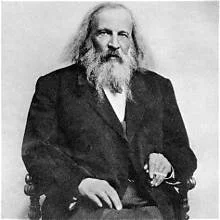
Take Dmitri Mendeleev, sorting handwritten cards in St. Petersburg during the winter of 1869 — arranging and rearranging the known elements until a pattern began to emerge, one with disturbing gaps in it. Most scientists would have assumed the pattern was simply wrong. Mendeleev didn’t. He trusted that nature was consistent enough that those gaps must belong to elements no one had discovered yet. When gallium, scandium, and germanium turned up in the following years, each one matched his predictions, and the pattern was vindicated. That’s not a fact to memorize — it’s a story, complete with a protagonist, a mystery, and a resolution years in the making.
An example like this isn’t an ornamental anecdote bolted onto "the real content" — it is the content. Scientific laws and concepts aren’t discovered in a vacuum; they’re discovered by particular people, at a particular time, wrestling with particular questions. A student who learns the Periodic Law without learning about the empty spaces on Mendeleev's table has learned a fact without learning why anyone should trust it, find it beautiful, or be surprised that it exists at all.
Three Questions
A science taught as story naturally organizes itself around three recurring questions, each drawn from a different discipline.
How did we discover this?
History reminds students that real people built scientific knowledge, confronting real questions as they went. Once students see that, the myth of the lone genius working in isolation gives way to something more accurate: science as a centuries-long conversation, one that has accumulated evidence, corrected error, and deepened understanding one precise measurement at a time.
How do we know it's true?
Philosophy asks students to distinguish observation from interpretation, evidence from explanation, and description from understanding. Much of what science describes — atoms, DNA, electromagnetic radiation — can’t be observed directly; scientists infer them. But inference isn’t guesswork; it’s a disciplined form of reasoning and it deserves to be taught explicitly rather than assumed. A student who never asks how we know has been handed conclusions without the reasoning that makes them trustworthy.
Why does it matter?
This is where theology provides the framework that makes the other two questions make sense. If creation is orderly because a wise and faithful Creator fashioned it, then the search for patterns in nature isn’t just a technique that happens to work — it’s a reasonable expectation grounded in the character of the One who made the world. That conviction casts Scripture and creation as two witnesses to the same truth: Scripture reveals the Creator and creation displays His wisdom, power, and faithfulness. The study of the material world, then, need never be treated as a threat to faith. Instead, it becomes an act of discovery, stewardship, and wonder.
These three questions aren’t separate lines of inquiry; each depends on the other two to do its work. History without philosophy produces trivia. Philosophy without history produces abstraction with no connection to the men and women who actually lived it. And either one without theology produces a science that’s silent, at best, about why any of it should matter — and, at worst, quietly hostile to the very tradition the school exists to pass on. Put the three together, though, and something more coherent appears: not three separate stories bolted together, but one continuing journey of discovery in which each stage prepares the way for the next.
Recovering — Not Adding
Classical Christian education is already committed to the principle that all truth is God’s truth and that the various disciplines aren’t islands, but neighboring rooms in a single house. A science taught as isolated content — divorced from its history as well as its philosophical and theological significance — quietly works against that commitment. At best, it suggests that faith and science may occupy neighboring rooms in the same house, but they don’t talk to one another. Teaching science as story opens the door between those rooms without softening the science.
What Students Gain
The real payoff of this approach isn’t just that students remember more, though they likely will — stories are, after all, what human memory is built to retain. The deeper payoff is in the habits of mind a well-told scientific story quietly cultivates. Michelson and Morley’s insistence on trusting their interferometer’s null result over the ether theory they’d expected to confirm models intellectual honesty. Dalton’s willingness to infer atoms no one had seen models disciplined imagination. Every scientist’s willingness to revise a cherished model in light of new evidence models intellectual humility. And the sheer patience it takes to pursue an answer across decades, sometimes across generations, models a confidence that’s neither naive nor cynical — a trust that careful investigation of an orderly creation is worth the wait.
These aren’t separate lessons appended to the science — they arise naturally out of its history. A teacher doesn’t need to invent them or force them; they only need to leave them in the story instead of editing them out to cover more content faster.

To paraphrase Marcel Proust, the real voyage of discovery consists not in seeking new landscapes but in having new eyes. That’s precisely the gift a well-told scientific story offers a student — not new information about water or salt or metal, but new eyes for a world that was already right in front of them and a renewed sense that the God who authored the single grand story of redemption also authored the smaller, no less true, no less remarkable stories of atoms, cells, and galaxies. Studying any of them faithfully is an act of worship.