
Scientific Literacy: Augustine's Forgotten Warning to Christian Educators

Several months ago, I wrote a LinkedIn post arguing that one of the greatest needs within Christian education today is not simply stronger science instruction, but greater scientific literacy. As I’ve continued thinking about that subject, I've become convinced that it deserves a fuller treatment because it reaches far beyond the science classroom. In fact, it affects Christian apologetics, biblical interpretation, and ultimately our credibility before a watching world.
While the expression scientific literacy is relatively new, the idea itself is, ironically, rather old. The term is generally attributed to Paul DeHart Hurd, a former biology teacher who later joined Stanford University's School of Education and he is widely credited with introducing scientific literacy into educational discourse during the middle of the twentieth century. Hurd believed that a scientifically literate citizenry would be able to make informed decisions about technology, public policy, and environmental stewardship.
Those are certainly worthwhile goals, but more than fifteen centuries before Hurd introduced the term, Augustine of Hippo had already recognized why scientific literacy mattered for Christians.

In The Literal Meaning of Genesis, Augustine warned that when Christians speak confidently about the natural world without first understanding it, they risk exposing their ignorance before those who know the subject better. His concern was not simply that Christians would be embarrassed, but, more importantly, that such ignorance would undermine the credibility of the gospel itself. If unbelievers concluded that Christians could not be trusted when discussing the natural world, why should they trust Christians when speaking about the resurrection, eternal life or the kingdom of God?
That is a sobering question and Augustine's warning is every bit as relevant today as it was in the fifth century.
Scientific Literacy Is More Than Knowing Scientific Facts
When many people hear the phrase scientific literacy, they think of memorizing facts, learning equations or recalling vocabulary for an exam. Certainly, scientific literacy includes knowledge, but it requires much more than information; it involves understanding how scientific knowledge is developed, where its strengths lie, where its limitations begin, and how evidence is interpreted.

This distinction is especially important in classical Christian education where the goal is not simply to help students earn high test scores. We seek to cultivate wisdom and that means teaching students to think carefully, reason honestly, and evaluate competing claims with humility.
Understanding the Nature of Science
One of the hallmarks of scientific literacy is understanding the nature of science itself. Science is far more than a collection of facts; it is a disciplined way of investigating the natural world through careful observation, measurement, experimentation, and reasoned interpretation and its strength lies not only in the knowledge it produces, but also in the methods by which that knowledge is tested, refined, and, when necessary, revised.
Scientific literacy also requires recognizing that scientific conclusions vary in both scope and certainty. Some conclusions are supported by repeated experimental evidence and enjoy broad consensus while others involve interpreting complex or incomplete evidence that thoughtful scientists may continue to debate. Appreciating these distinctions helps students avoid two opposite errors: treating every scientific claim as equally certain or dismissing well-established scientific knowledge simply because some scientific questions remain unsettled.
Equally important, scientifically literate individuals understand that science does not operate in isolation. Scientific discoveries often raise historical, philosophical, ethical, and theological questions that science alone cannot answer. Knowing where scientific investigation ends and where other disciplines begin is itself an essential aspect of scientific literacy.re fields of legitimate research came to a standstill.
For classical Christian educators, this broader understanding of science is indispensable; it enables students to appreciate both the remarkable power of scientific inquiry and its proper place within the larger pursuit of truth. Rather than seeing science and the humanities as competing ways of knowing, they learn to recognize how each contributes to a richer understanding of God's world.
Scientific Literacy Includes Reading Scripture Wisely

Scientific literacy has implications far beyond the science classroom and one important example is the way Christians read and discuss biblical passages that intersect with the natural world. Scientific literacy does not diminish Scripture's authority; rather, it helps us understand what Scripture intends to teach and cautions us against asking it to answer questions it was never written to address.
Consider Genesis. Too often, Christians approach its opening chapters expecting them to function as a modern scientific text. However, theologian Vern Poythress observes that Genesis describes creation using the ordinary language of everyday human experience. Likewise, John Calvin described Genesis as "the book of the unlearned," emphasizing that it was written so ordinary people throughout history could understand its message.
Genesis was not intended to function as a twenty-first-century scientific textbook; its primary purpose is theological. It proclaims that God created the heavens and the earth, that humanity bears His image, that creation is good, and that sin fractured God's good world.
Augustine recognized this distinction and his warning was not against science, but against Christians confidently making claims about the natural world that exceeded both the intentions of Scripture and their own understanding of creation. Scientific literacy reminds us that both God's Word and God's world deserve careful interpretation.
Scientific Literacy Requires Intellectual Charity
Scientific literacy encompasses both a knowledge of science and the habits of mind that govern how we discuss and evaluate scientific claims. One of those habits is intellectual charity — the discipline of understanding a position accurately before attempting to evaluate or critique it.
Disagreements in science often become unproductive because people argue against caricatures rather than the ideas themselves. However, scientific literacy calls us to a higher standard; before we reject a scientific claim, we should first ask whether we have represented it fairly and whether its proponents would recognize our description as an accurate one.
Discussions surrounding evolution provide a useful example. No matter whether one ultimately accepts or rejects evolutionary explanations, intellectual honesty requires understanding what the theory actually claims and one of the most common misunderstandings concerns purpose. Christians naturally think in terms of purpose because Scripture presents creation as the product of God's intentional design while modern evolutionary theory explains biological change through undirected natural processes. Natural selection is not understood by its proponents as progressing toward intelligence, humanity, or increasing complexity. Instead, it describes how heritable variations that enhance survival and reproduction become more common within populations over time.
Recognizing this distinction does not require agreement with evolutionary theory. It simply demonstrates a willingness to engage ideas on their own terms rather than through misunderstandings and this is one of the intellectual virtues classical Christian education should cultivate. Our students should learn to evaluate competing claims with both conviction and fairness and to remember that careful listening and accurate representation are marks of wisdom just as much as persuasive argument.
Cultivating Intellectual Virtue
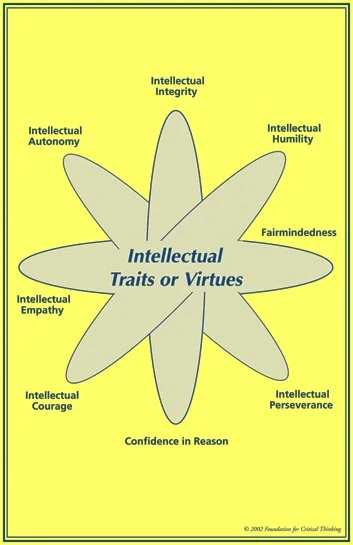
Scientific literacy is not simply about acquiring knowledge; it is about developing the intellectual virtues that enable us to pursue truth well. Curiosity, humility, patience, intellectual courage, and honesty are as essential to scientific inquiry as observation and experimentation.
Unfortunately, Christians have not always modeled these virtues. At times, we have been content to dismiss unfamiliar scientific ideas without first taking the time to understand them while, at other times, we have spoken with greater confidence than our knowledge warranted. Augustine recognized this danger more than fifteen centuries ago and his warning remains as relevant today as ever.
Classical Christian education offers a better way. Rather than shielding students from difficult questions, we should equip them to investigate those questions thoughtfully and faithfully. They should learn to distinguish evidence from interpretation, recognize the philosophical assumptions that often shape scientific discussions, and evaluate competing claims with both conviction and intellectual charity.
The Apostle Peter exhorted believers to "always be prepared to give an answer to everyone who asks you to give the reason for the hope that you have." Preparation requires study. Study requires curiosity. And, curiosity flourishes where there is confidence that all truth is God's truth.
When we cultivate these intellectual virtues, scientific literacy becomes more than an educational objective; it becomes a means of forming wise and faithful Christians who are prepared to engage the scientific questions of their generation with humility, discernment, and confidence.
Augustine's Challenge to Us
Paul DeHart Hurd gave us the modern term of scientific literacy, but it was Augustine who gave us a compelling reason to pursue it. When Christians speak confidently about subjects they have never taken the time to understand, we risk diminishing our credibility and placing unnecessary obstacles before those who are genuinely seeking the truth. Augustine understood that our witness is strengthened not merely by what we believe, but by the care, humility, and integrity with which we communicate those beliefs.
For classical Christian educators, this presents both a challenge and an opportunity. Our calling is not simply to prepare students for college science courses or future careers in STEM fields. Our calling is to cultivate men and women who love God with all their minds — students who are intellectually curious, scientifically literate, and committed to pursuing truth wherever it is found.
This means teaching students to observe carefully, reason honestly, distinguish evidence from interpretation, recognize the limits of their own knowledge, and engage competing ideas with both conviction and intellectual charity. These habits of mind do more than produce capable scientists; they form thoughtful disciples whose confidence rests not in having all the answers but in faithfully seeking the truth.
If Augustine's warning remains relevant — and I believe it does — then scientific literacy is far more than an educational objective; it is an essential component of Christian discipleship. In a culture that often assumes faith and careful thinking are incompatible, our students have an opportunity to demonstrate otherwise. May they become people whose love of God is evident not only in what they believe, but also in the humility, wisdom, and intellectual integrity with which they pursue and communicate the truth.