
From Alchemy to AI: The Wisdom to Use What We Know
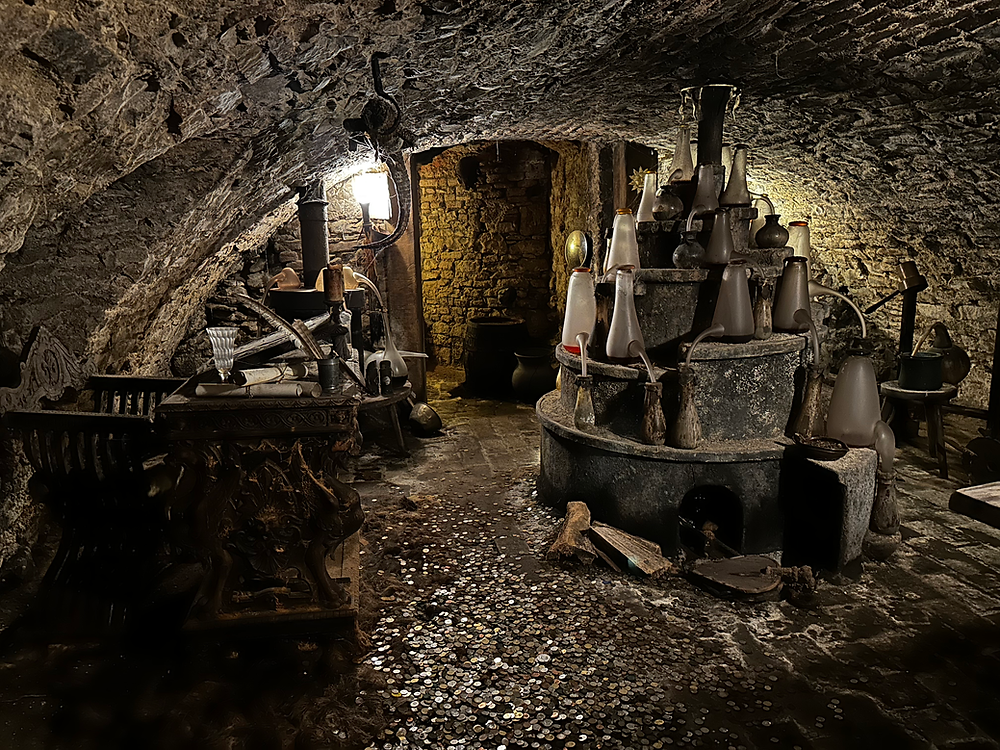
Every science teacher knows the moment a student lights up because something finally worked: a solution changes color in the flask, an onion root-tip cell splits in two under the microscope or a magnet pushed through a coil of wire makes the needle on the meter jump. In each case, one thing becomes another. That delight is old; it is as old as the alchemist's furnace and it deserves our attention because the same longing that drove men to seek the philosopher's stone later split the atom and now builds machines that imitate the mind.
The tools have changed dramatically, but the question underneath them has not: once we understand how nature works and can remake it, who will teach us to use that power well? For those of us teaching science in classical Christian schools, that question is not an add-on to the curriculum. It may, in fact, be the reason our curriculum exists.
The Alchemist's Furnace: The Old Dream of Transformation
Alchemy usually shows up in our classrooms as a punchline: medieval eccentrics trying to turn lead into gold. However, the real history is more interesting and more sobering. Alchemists were serious people doing serious work at the furnace and the flask and their laboratory practice helped prepare the way for chemistry.
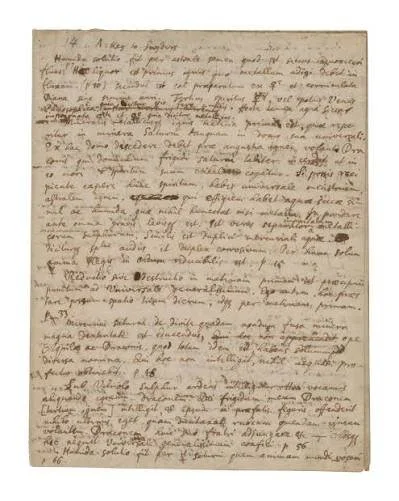
They were not all eccentrics, either. Isaac Newton wrote at least 131 manuscripts on alchemy, totaling roughly a million words. After studying those papers, the economist John Maynard Keynes famously concluded that "Newton was not the first of the age of reason. He was the last of the magicians."
What set alchemy apart was not its chemistry, but its ambition. The alchemist wanted more than to understand matter; he wanted to perfect it, to hurry nature along toward gold. Knowing and transforming were a single project.
C. S. Lewis saw the family resemblance between that ambition and our own. In The Abolition of Man, he wrote that "the serious magical endeavour and the serious scientific endeavour are twins: one was sickly and died, the other strong and throve." Both, he argued, shared a goal: "For magic and applied science alike the problem is how to subdue reality to the wishes of men: the solution is a technique." Lewis was not dismissing science. He was naming the temptation that lives inside any power over nature: the assumption that our ambition needs no examination.
Splitting the Atom: The Dream Fulfilled
In 1901, Frederick Soddy realized that radioactive thorium was turning into a different element. "Rutherford, this is transmutation!" he exclaimed. Ernest Rutherford's reply is one of the great lines in the history of science: "For Mike's sake, Soddy, don't call it transmutation. They'll have our heads off as alchemists!"
By 1919, Rutherford was doing it deliberately – bombarding nitrogen with alpha particles and knocking hydrogen nuclei loose. Later cloud-chamber work showed the nitrogen had become oxygen. The alchemists' oldest goal, changing one element into another, had been reached – not by mysticism but by physics.
Within a generation, that knowledge became a weapon. The Manhattan Project turned nuclear physics into the bombs dropped on Hiroshima and Nagasaki in August 1945. In a 1947 lecture he gave at MIT, J. Robert Oppenheimer said: "The physicists have known sin; and this is a knowledge which they cannot lose."

Notice the word he chose. Not "error," not "risk," but sin. The physicists realized that understanding nature does not tell you what to do with it. The equations were silent on that question. The moral knowledge they needed had to be brought into the laboratory because it could not be found there. A civilization, it turns out, can be very good at physics and still unprepared for what physics makes possible.
Thinking Machines: Transforming the Mind Itself
Artificial intelligence continues this pattern with one striking difference. The alchemist sought to transform metals. The physicist transformed the atom. AI aims to reproduce, and some hope to surpass, the very ability that made those earlier projects possible: human thought.

The people building these systems seem to comprehend the weight of this. In May 2023, leading researchers and industry figures, including Geoffrey Hinton, Yoshua Bengio, and the heads of OpenAI, Google DeepMind, and Anthropic, signed a one-sentence statement: "Mitigating the risk of extinction from AI should be a global priority alongside other societal-scale risks such as pandemics and nuclear war." The comparison to nuclear war was theirs. The thread from Los Alamos to today's AI labs is one the scientists themselves have drawn.
This time the transformation is close to home. While alchemy happened in a few workshops and nuclear physics in guarded laboratories, AI sits in our students' pockets. It will shape how they write, how they research, and perhaps how they think – long before most of them are old enough to weigh what that means. Our classrooms are not bystanders to this story; they are one of the places where it is being decided.
Thoughtful people disagree about whether warnings like that are prophetic or overstated. Either way, the underlying question is a familiar one. We can now build tools that write, summarize, and persuade. What they should be used for, and what they should never be used for, is not something the tools can tell us. Lewis's diagnosis still fits: AI is a powerful technique for subduing reality to our wishes. The question it cannot answer is whether our wishes are good.
Teaching Wisdom Alongside Knowledge

If there is one thread running from the furnace to the reactor to the data center, it is this: each leap in our power to transform nature has outrun our wisdom about using it. Scripture puts the order plainly: "The fear of the LORD is the beginning of wisdom" (Proverbs 9:10). From the beginning, our work in creation was framed as stewardship. Adam was placed in the garden "to work it and keep it" (Genesis 2:15). Dominion was never meant to be domination.
That gives science teachers in classical Christian schools a distinct calling. We don't teach science less rigorously because we care about wisdom; we teach it more fully. Here are a few ways that can look in practice:
Teach the history, not just the results. Students who learn that Newton pored over alchemical texts or that Rutherford worried about being called an alchemist learn to see science as a human enterprise driven by human desires.
Pair scientific content with moral questions. After a unit on nuclear chemistry, ask: Who should decide how this knowledge is used? What did Oppenheimer mean by "sin," and could it have been avoided?
Read across disciplines. The Abolition of Man belongs in the science classroom as much as the literature class.
None of this requires turning a science class into a theology seminar. It requires teachers who believe that "Should we?" belongs in the same room as "Can we?" and who are willing to ask it out loud. Students notice which questions we treat as serious. If we only ever ask how nature works, they will reasonably conclude that nothing else matters.
The alchemists wanted to perfect matter. The physicists unlocked it. Today's engineers are trying to recreate the mind. Our students will inherit powers none of those earlier generations imagined. Our task is not only to make them capable of understanding nature, but to help them become the kind of people who can be trusted to transform it.