
History, Ideology, and the Integrity of Science

Science as Part of the Human Story
One of the great strengths of classical Christian education is its commitment to integrating knowledge across disciplines. Science should never be taught as though it exists in isolation from history, philosophy, or theology and students should be taught that scientific ideas develop within a larger human story — one shaped by cultural assumptions, political pressures, and philosophical commitments. Understanding the broader story helps students appreciate both the power and the limitations of science while cultivating the intellectual virtues necessary for its proper practice.
When students first encounter the philosophy of science, they typically learn that science seeks to understand the natural world through observation, experimentation, and evidence. They also learn an important principle: scientific conclusions should be guided by data rather than by politics, ideology, or personal preference. This sounds obvious, but history demonstrates how easily that principle can be abandoned when governments or institutions demand that science serve political ends.
Perhaps no episode illustrates this danger more vividly than the story of Gregor Mendel and Trofim Lysenko.
Gregor Mendel and the Birth of Modern Genetics
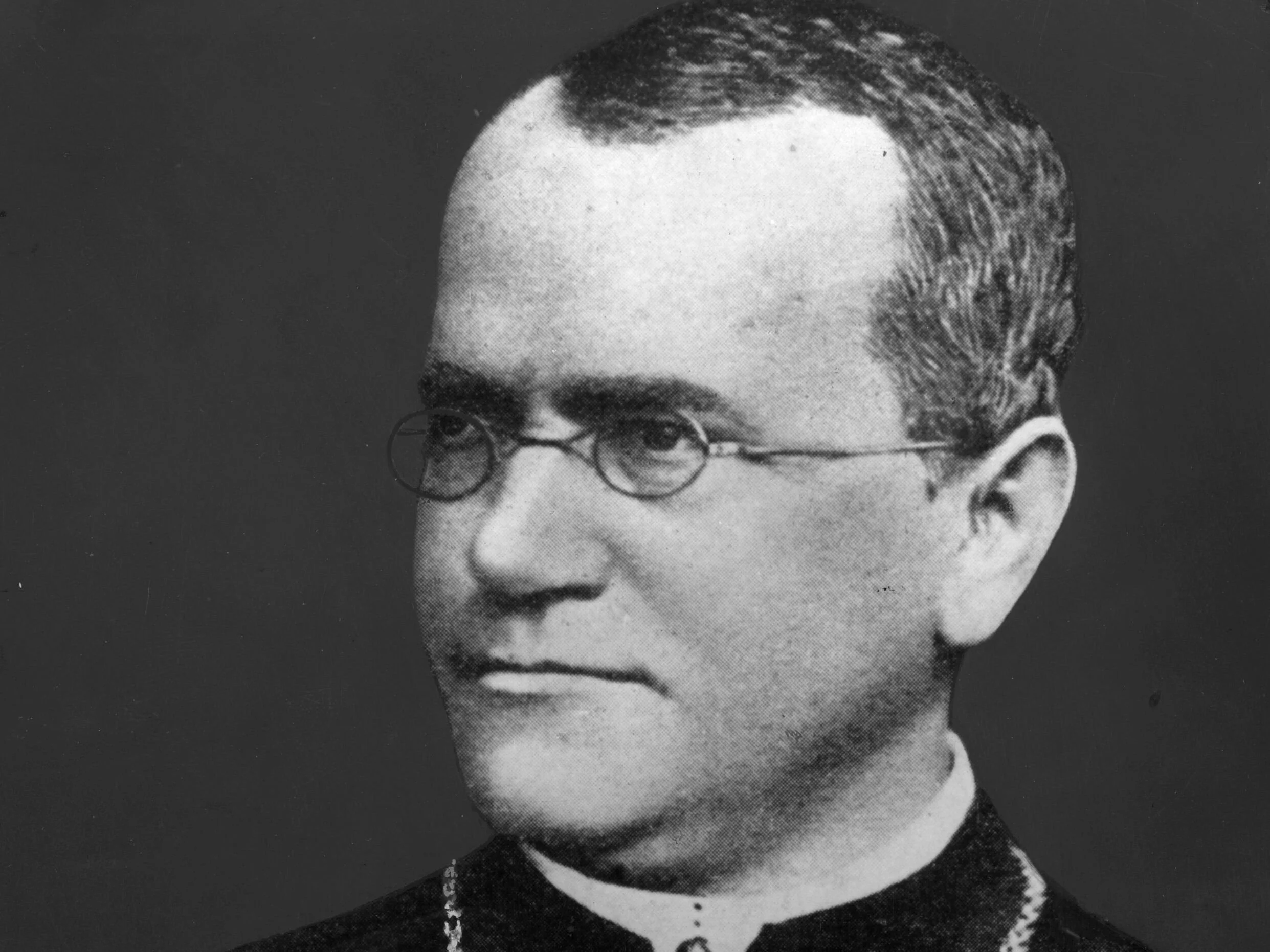
Gregor Mendel, the nineteenth-century Austrian monk, conducted careful experiments with pea plants and uncovered the mathematical regularities underlying the inheritance of traits from one generation to the next. His work, published in 1866, laid the foundation for modern genetics, but almost no one paid attention. However, his paper was largely ignored during his lifetime and lay largely unnoticed until its rediscovery by the Dutch botanist, Hugo de Vries, in 1900. Once scientists recognized the significance of Mendel's findings, genetics rapidly developed into one of biology's most productive fields.
When Politics Replaced Genetics
Yet, only a few decades later, those same principles would come under sustained attack in the Soviet Union.
The campaign was led by Trofim Lysenko, an agronomist who rejected Mendelian genetics and promoted the belief that acquired characteristics could be inherited by future generations. His theories resembled the earlier ideas of Jean-Baptiste Lamarck, lacked experimental support, and, outside the Soviet Union, few scientists accepted his claims. Inside the Soviet Union, however, his ideas gained extraordinary influence because they aligned with the political ideology of the Communist Party.
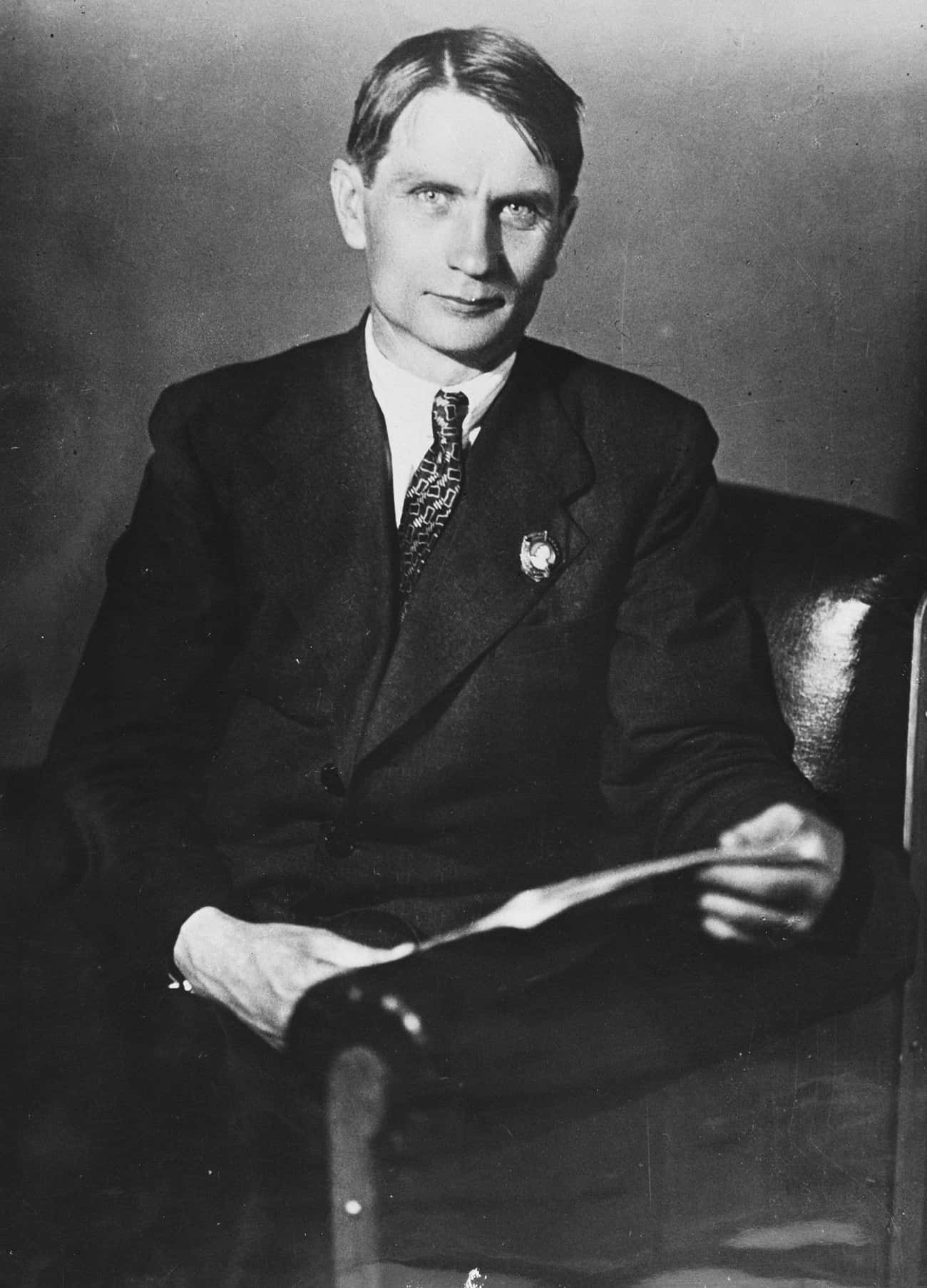
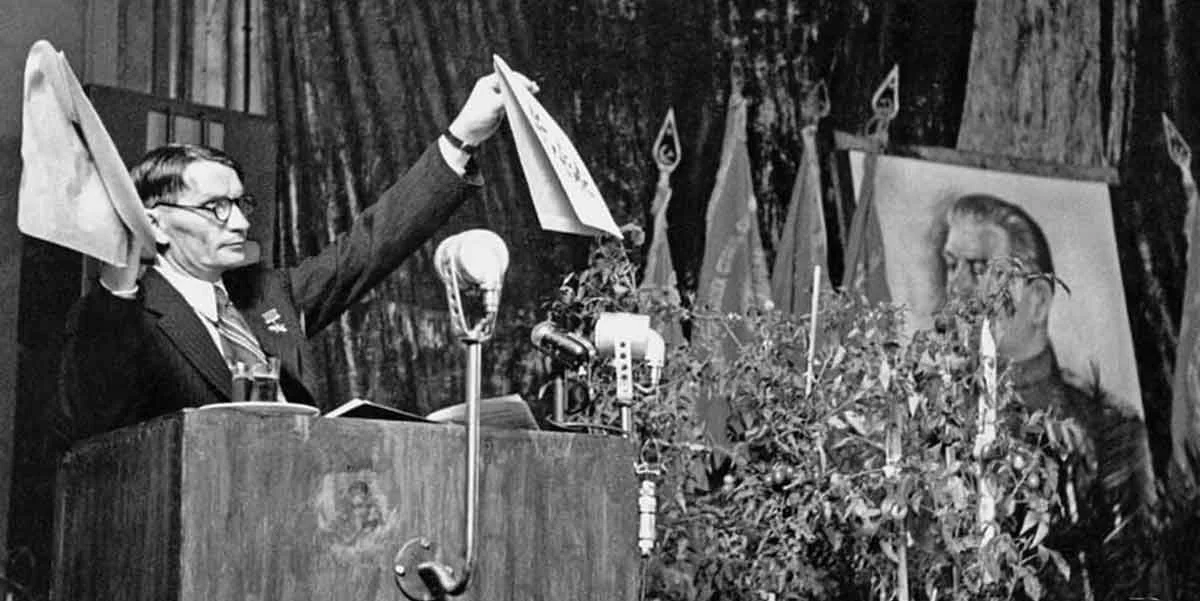
With the support of Joseph Stalin, Lysenko rose rapidly through the ranks of Soviet science. By the 1940s he controlled much of the nation's biological research and Mendelian genetics was outlawed. Scientists who challenged Lysenko’s conclusions lost their positions, were imprisoned, or disappeared altogether. Entire fields of legitimate research came to a standstill.
The evolutionary biologist Stephen Jay Gould later described Lysenko's domination of Soviet biology as one of the most chilling episodes in the history of twentieth-century science.
How Lysenkoism Took Root
How could this happen?
Part of the answer lies in the historical circumstances facing the Soviet Union. Revolution, civil war, famine, and forced collectivization had devastated agricultural production and political leaders who desperately wanted rapid increases in crop yields were eager to embrace anyone promising miraculous results. Lysenko claimed to possess agricultural methods that would dramatically improve harvests by transforming one type of plant into another and by altering crops through environmental stresses. His promises were welcomed because they offered hope during a period of repeated agricultural disaster.
The problem was that his claims did not work
When experiments failed, Lysenko blamed incompetent researchers or political enemies rather than reconsidering his theories and because his ideas enjoyed official political support, criticism became dangerous. Scientific disagreement was no longer treated as an ordinary part of inquiry but as evidence of ideological disloyalty.
Lysenko also carefully cultivated his public image. He portrayed himself as the son of poor peasants who had triumphed over academic elites through practical wisdom and patriotic devotion. Meanwhile, newspapers celebrated him as a uniquely Soviet genius whose discoveries would transform agriculture. However, his appeal wasn’t built on evidence but on symbolism. Very simply, he represented the kind of scientist the regime wanted its citizens to admire.
When Ideology Becomes Scientific Authority
Perhaps most importantly, Lysenko made biology serve ideology, contending that if socialism could reshape human nature, then the same environmental forces could also reshape plants. Consequently, his scientific claims reinforced the political ideology of the Communist Party.
The consequences were devastating. Soviet genetics fell decades behind the rest of the world, agricultural productivity suffered, and countless scientists paid a terrible personal price for defending evidence that contradicted official ideology. Politics had replaced experimentation as the final authority.
The Temptation to Politicize Science Today
This episode offers an important lesson that extends far beyond Soviet history and the temptation to politicize science has never disappeared. Every generation faces pressures to align scientific research with ideological commitments, economic interests or political priorities.
The United States is not immune to these pressures. In recent years, debates surrounding climate change, public health policy, energy production, biomedical research, artificial intelligence, and environmental regulation have become deeply political. Different presidential administrations have reorganized agencies, redirected research funding, appointed advisory panels that reflect their policy priorities, and sought to shape the nation's scientific agenda. The current administration is pursuing significant changes in federal scientific research and funding that supporters describe as correcting institutional bias and increasing accountability, while critics worry that political considerations may influence scientific priorities and personnel decisions.
Reasonable people can disagree about the wisdom of these reforms, but this is not the fundamental issue. The more important question is whether scientific conclusions will be predicated on evidence — even when those conclusions prove inconvenient to political leaders, activists, corporations or voters.
The lesson of Lysenko is not that one political ideology is uniquely dangerous. More broadly, the lesson of Lysenko is that every ideology carries the temptation to recruit science as an ally instead of allowing it to function as an independent search for truth. When funding, careers, or public acceptance become dependent upon reaching approved conclusions, the conditions for genuine scientific inquiry begin to erode.
Teaching Wisdom Through the History of Science
From a classical Christian perspective, this danger should not surprise us. Christians affirm that human beings are finite and fallen; pride, ambition, and the desire for power affect every human institution, including science. However, this recognition should produce humility rather than cynicism and it should encourage transparency, rigorous debate, careful experimentation, and a willingness to revise our conclusions when new evidence emerges.
Thus, teaching the history and philosophy of science serves a purpose far greater than adding historical anecdotes to a science lesson; it helps form habits of mind. Students learn that scientific knowledge advances through open criticism, replication of experiments, and honest disagreement. They learn that evidence is neither strengthened by political endorsement nor weakened by political opposition. They also learn that intellectual courage sometimes requires defending unpopular conclusions against immense social pressure.
The story of Lysenko remains one of history's clearest warnings about the corruption of science by ideology. Whenever scientific claims become political litmus tests and dissent becomes unacceptable, both science and society suffer. The health of scientific inquiry depends upon freedom to question, freedom to test, and freedom to follow evidence even when it overturns our assumptions
That is a lesson worth teaching. In an age when scientific debates increasingly shape public policy and cultural life, students need more than technical knowledge. They need wisdom, intellectual humility, and a commitment to truth that rises above political trends. Integrating history and philosophy into science instruction is one important way classical Christian education can help cultivate those virtues.