
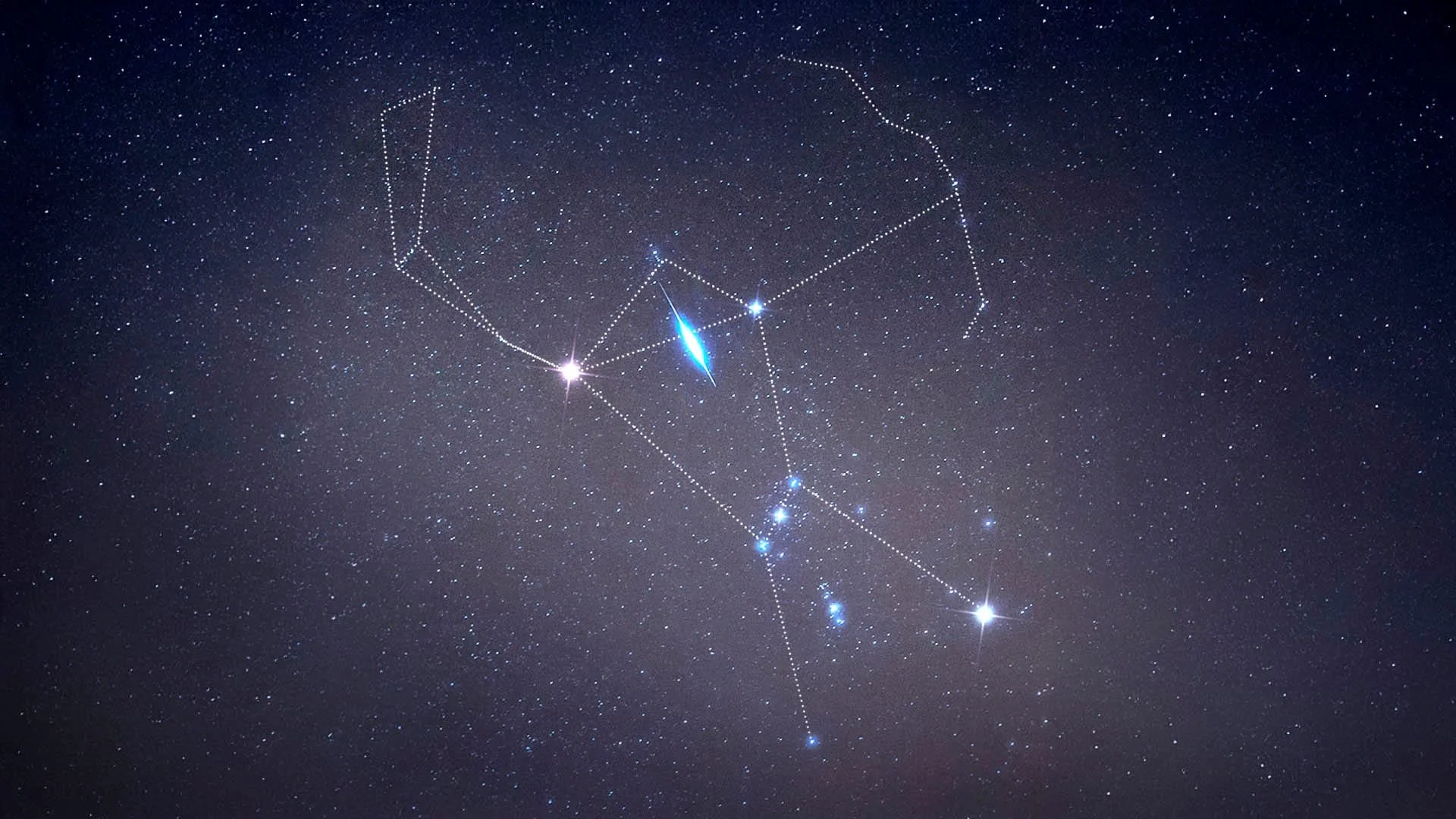
What We See and What We Think We See
I recently attended a gathering of science teachers where a number of my peers presented sessions on ways to improve instruction in classical Christian education. One session focused on something that sounds basic, but is, in fact, central to the scientific endeavor: the difference between an observation and an inference.
An observation is what we actually perceive. The liquid turned blue. The ball fell. The plant leaned toward the window. An inference is the explanation we build on top of what we perceive. The plant seeks the light. The reaction must have produced copper ions. Inferences aren't bad and science certainly doesn’t move forward without them, but when we fail to recognize which is which, we stop doing science and start making up stories.
That session reminded me of something I wrote previously about assumptions because I've come to believe the observation–inference distinction isn't only a lab skill; it’s a habit of mind that shapes far more of our everyday decisions than we realize
The Shortcut We All Take
Without realizing it, we make assumptions all day long. They're shortcuts that let us operate with incomplete information and fill in the blanks when we don't know the whole story. They let us live as if we know a lot more than we really do, and that belief, mistaken as it is, gives us a peace of mind we wouldn't otherwise have.
While out running errands this morning, I assumed the other drivers would, by and large, obey the traffic laws and, as long as we all did, I'd avoid an accident. I made that same assumption one August afternoon on my way to go rock climbing – only to have that assumption and my Honda CR-V destroyed by another driver.
I see two potential dangers in making assumptions.
The first is that we assume we can read the hearts and minds of others. We think we’re omniscient and we do this without even noticing. It’s quite easy because, like Eve in Genesis 3, we want to be like God. When we say, "I know what you're thinking," or "You're only doing that because…," we're claiming knowledge we don't have and most of the time our assumption is a projection of what’s in our hearts. When we posture as if we’re morally and spiritually superior to those around us, we are quietly feeding our self-righteousness and, although I'm no theologian, my experience tells me we can pursue omniscience – a pursuit doomed to fail – or we can love our neighbor. We can't do both because, according to the gospel, love looks for the best in others and not the worst.
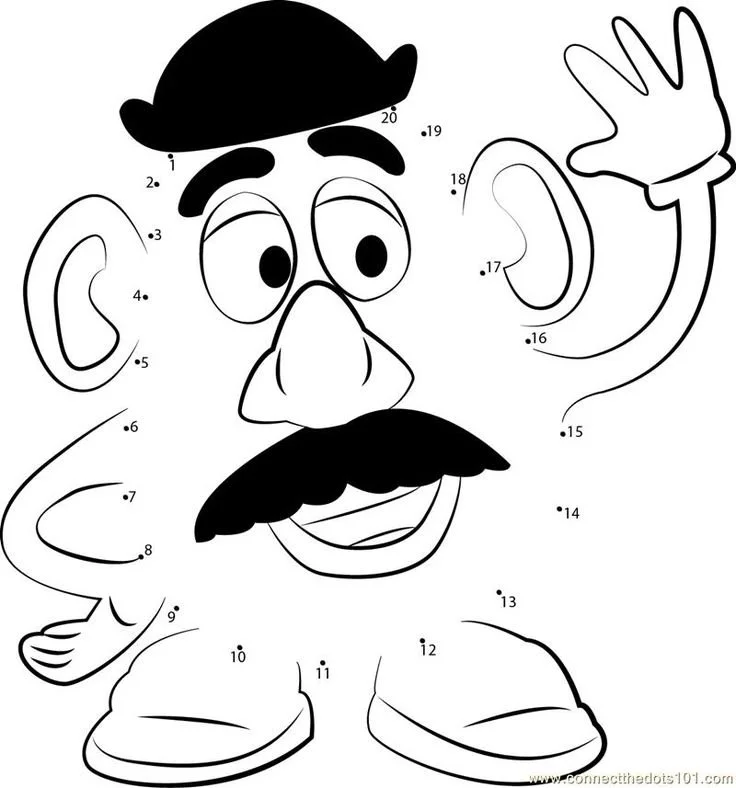
The second danger in making assumptions is that we confuse them with objective truth. I make assumptions precisely because I lack information, so I take the pieces I have and build a story that makes sense to me. You can take the same pieces, connect them in a way that makes sense to you, and end up with an entirely different story.
It's like the connect-the-dots games we played as kids – with one crucial difference: in the game we all had to connect the dots in the same order and we ended up with the same picture. Life doesn't work that way because we're free to connect the dots in any order we like. Along the way, we make lots of mistakes and sometimes we even include dots that aren't there.
The Lenses We Don't Know We're Wearing
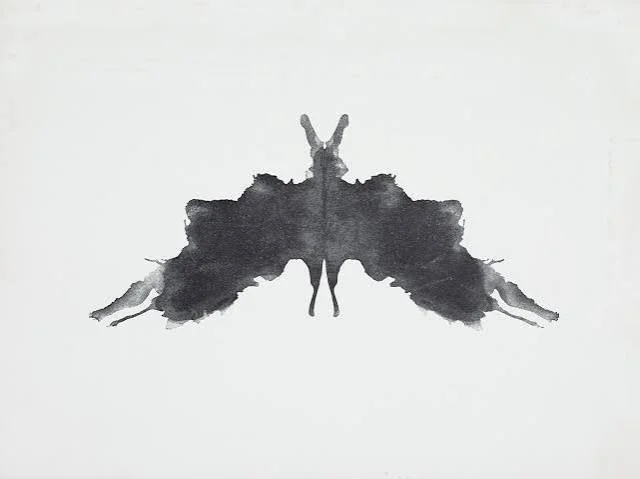
Individual assumptions are only part of the problem. We also inherit assumptions from our communities and those are harder to spot because everyone around us shares them. This even happens in our faith communities where, as Skye Jethani suggests, we have a tendency to approach scripture like a Rorschach inkblot and see what we want.
If this can happen with scripture which we approach with reverence and care, it can certainly happen with a data table, a lab result or a classmate's argument. The scientist's version of the inkblot is confirmation bias: noticing the evidence that aligns with what we already believe and ignoring or discounting contradictory evidence.
Where the Science Classroom Comes In
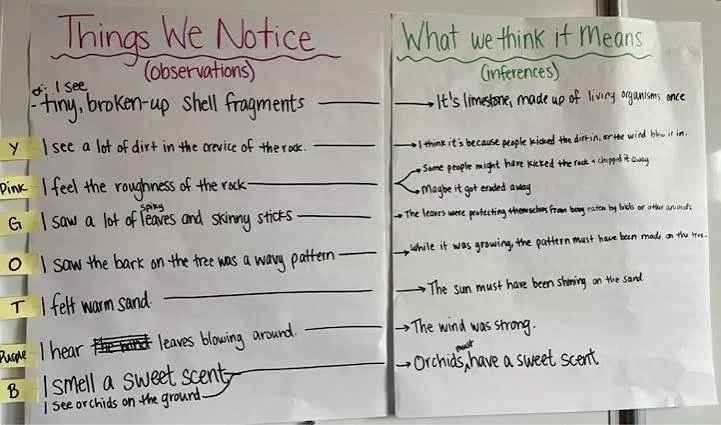
Here's the good news for those of us who teach science in classical Christian schools: our discipline is, at its best, a training ground for developing the skills needed to avoid these intellectual traps. The scientific process is meant to be a safeguard against fooling ourselves, but we have to teach it as a set of habits and not merely a set of steps. Here are a few habits worth cultivating:
Separate the seeing from the explaining. Make students write observations and inferences in separate columns, every time, until it becomes automatic. When a student says, "The solution got hot because the reaction released energy," ask, "Which part did you see?"
Ask, "What else could explain this?" Once students propose an explanation, require at least one alternative. This is the connect-the-dots problem in miniature: the same data points can be combined to produce more than one picture. Students who learn to generate rival explanations are less likely to fall in love with their first story.
Hunt for the missing dots. Ask what information they don't have. What wasn't measured? What would they need to know to be sure? Identifying the gaps keeps students honest about the difference between knowing and assuming.
Look for the evidence that could prove you wrong. Confirmation bias thrives when we only look for support. Teach students to ask what result would show their hypothesis is mistaken, and then to go looking for it. That's not a lack of confidence – it’s intellectual integrity.
Hold conclusions with open hands. Model tentative language: "The data suggest," or "Based on what we've seen so far." When students watch their teacher revise a conclusion in light of new evidence, they learn that changing your mind is an act of honesty and not failure.
Show them why it matters. Here classical Christian education has something distinctive to offer. We can tell students plainly that careful reasoning is actually an act of love. The same habit that keeps them from overstating a lab conclusion keeps them from presuming the worst about a classmate. When we refuse to fill in dots that aren't there, we treat both God's creation and our neighbor with honesty.
Truly Seeing
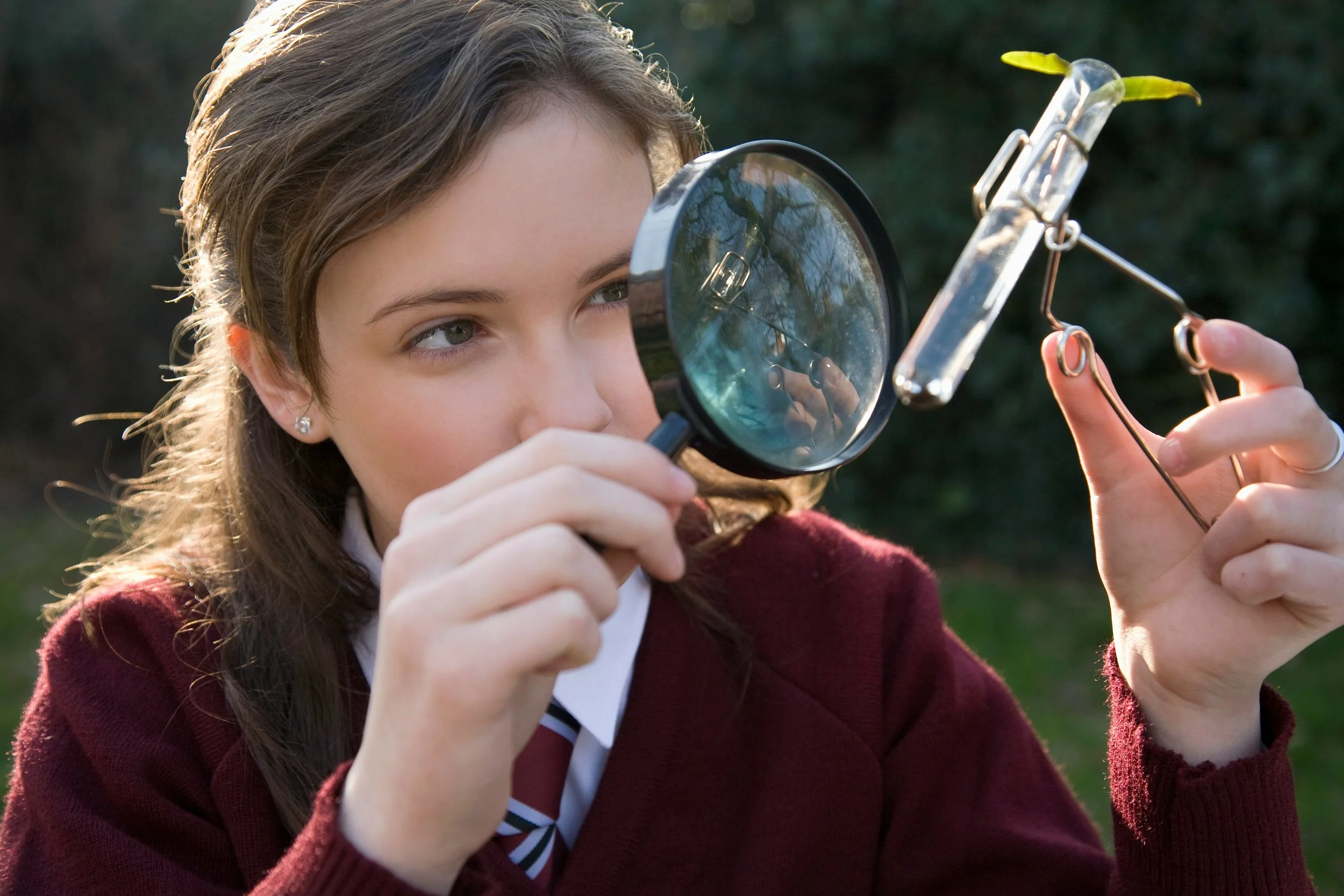
We will never eliminate assumptions; we're finite creatures and we need shortcuts to get through the day. But we can help our students become aware of them, test them, and hold them loosely. That's what good scientists and humble people do.
So, the next time a student hands you a lab report full of confident conclusions, try asking a simple question: "What did you actually see?" It may be one of the most important questions they learn to ask – in the lab and far beyond it.