
The Facts of the Christian Faith

When Facts Are Ignored: The Challenger Tragedy

On January 28, 1986- the day of the Space Shuttle Challenger’s launch- Roger Boisjoly (pronounced BOH-zhə-LAY) was a mechanical engineer working for Morton Thiokol, the contractor that built the Challenger’s solid rocket boosters which provide it with the extra push it needs to break free of Earth’s gravity and reach orbit.
Six months before the Challenger launch, Boisjoly sent a memo to his bosses warning that cold temperatures could harm the boosters and, in his words, produce “a catastrophe of the highest order” resulting in “loss of human life.” The night before the launch the temperature was 30°F and Boisjoly and his engineering colleagues spent hours arguing that the launch should be delayed. At first, management agreed, but then, under pressure from NASA, Morton Thiokol reversed course and approved the launch. Later Boisjoly said he and the other engineers came away with the clear impression they were being told, “Go away and don’t bother us with the facts.”
Seventy-three seconds after liftoff, at an altitude of about 46,000 feet, Challenger broke apart and all seven crew members died. The subsequent investigation identified the cause: solid rocket booster failure due to the cold.
The engineers had supplied facts. Those facts were ignored. People died.
What Facts Are and How We Respond to Them
I’d like us to consider what “facts” are, how we respond to them, and why this matters for the Christian faith. Facts are pieces of information that can be checked and confirmed—by observation, measurement, or reliable testimony. That’s exactly what the Morton Thiokol engineers did: they measured, observed, and concluded that cold weather made the solid rocket boosters unsafe. Their findings were facts.
Basically, there are two ways people respond to facts. One is thoughtful: we hear new information, weigh it, and change our view when the evidence requires it. The other is defensive: we reject facts that threaten our current beliefs or the arguments we want to make. Psychological research shows that when we’re uncertain or afraid, we’re likely to cling to what we already believe-even in the face of strong evidence to the contrary. In short, we often believe what comforts us rather than what’s true.
Paul’s Gospel Facts and the Person They Reveal
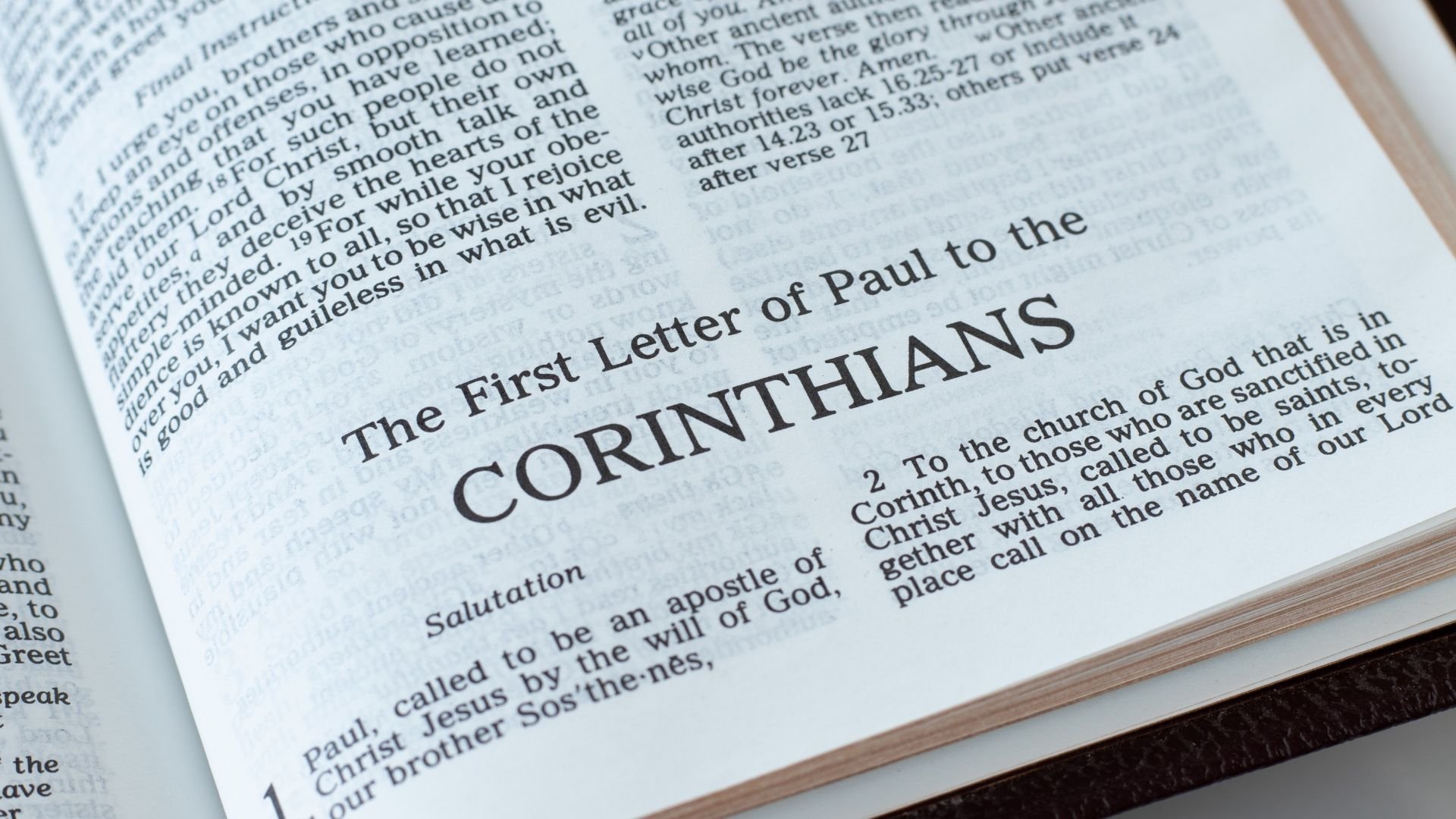
Having defined facts and identified how we routinely respond to them, let’s consider Paul’s approach to the gospel of Jesus Christ in 1 Corinthians 15:3-8:
3 For I delivered to you as of first importance what I also received: that Christ died for our sins in accordance with the Scriptures, 4 that he was buried, that he was raised on the third day in accordance with the Scriptures, 5 and that he appeared to Cephas, then to the twelve. 6 Then he appeared to more than five hundred brothers at one time, most of whom are still alive, though some have fallen asleep. 7 Then he appeared to James, then to all the apostles. 8 Last of all, as to one untimely born, he appeared also to me.
If facts are information verified by evidence or dependable testimony, then, in these six verses, Paul is presenting the essential facts of the Christian faith. In verses 3–4 he gives three clear, historical claims: Christ died for our sins, he was buried, and he was raised on the third day. In verses 5–8 he names reliable witnesses—people and groups who can confirm those claims. Paul is making the case that these are factual, verifiable claims, not merely feelings or private impressions.
So here, according to the Apostle Paul, are the facts of the Christian faith:
Christ Died for Our Sins
Christ died for our sins—stated in the past tense indicates that Paul saw Christ’s death as a real event in history. He also makes it clear that Christ died “for our sins.” In other words, Jesus didn’t die for a political cause, and He wasn’t executed as a true enemy of the state or for any crime deserving death. Our sin—and our complete inability to deal with it ourselves—made it necessary for God the Father to pour out on God the Son the full measure of wrath our sin deserved. Christ took that judgment fully and satisfied God’s wrath.
Finally, when Paul says Christ’s death was “in accordance with the Scriptures,” he’s telling us that this wasn’t random or accidental; it fulfilled Old Testament prophecies spoken centuries earlier.
Christ was Buried
Christ was buried—again a past event; burial points to the finality of death and confirms Jesus’ bodily death.
Like the first fact Paul gives, this second fact is also written in the past tense, which means he’s pointing to another historical reality. But Paul phrases this one a little differently. He says, “Christ was buried,” and that wording tells us that someone else carried out the burial. After all, the dead don’t bury themselves.
Burial marks the end of a person’s physical presence in this world, and when we watch a body lowered into the ground, we’re witnessing the finality of death. In John’s account of Jesus’ crucifixion, a soldier thrust a spear into Jesus’ side, and even though blood and water flowed out, Jesus didn’t flinch or cry out (John 19:34). The blood showed that it was real flesh and blood—and not a spirit or ghost—hanging on that cross, and His lack of reaction could only mean one thing: He was dead. And when a person is dead, someone else has to bury them.
Normally, people crucified by the Romans were buried in a criminals’ cemetery outside the city. But about seven hundred years before Jesus’ burial, the prophet Isaiah (53:9) had already foretold that the Messiah would be buried among the rich. And in Matthew’s account of Jesus’ burial (Matthew 27:57), we learn that Joseph, “a rich man from Arimathea,” took Jesus’ body and placed it in his own new tomb.
Even Jesus’ burial fulfilled Old Testament Scripture.
Christ was Raised
Paul’s third fact is written in much the same way as his second fact; it’s another past-tense statement, which means Paul is pointing to another historical reality. And by saying “Christ was raised,” Paul is making it clear to the Corinthians that someone else was responsible for Christ’s resurrection. Just as the dead don’t bury themselves, they also can’t raise themselves from the dead. In fact, in his letter to the Ephesians (1:20), Paul states plainly that it was God who raised Christ from the dead and seated Him at His right hand in heaven.
Even though Jesus endured the full wrath of God on the cross—as if He were guilty of all our sin—He never became a sinner. The perfect Son of God made a perfect payment for our sin, and His permanent victory over death stands as the unmistakable proof of that.

Three pieces of information stand at the center of Paul’s message: Christ died for our sins, Christ was buried, and Christ was raised. And each piece of information is confirmed by individuals or groups Paul considers reliable. Hence, these are the facts of the Christian faith.
Why Facts Matter for Faith, Life, and Learning
Although my faith begins with these facts, it is not merely in the facts themselves—my faith rests in the person those facts describe: Jesus Christ. Someone willing to die for my sins, be buried and who was then raised from the dead, that person is worthy of my faith. That person is worthy of the one and only life I have to live and give.
As I mentioned earlier, there are really only two basic ways to respond to facts: we can take them seriously and think them through, or we can reject them because we’d rather hold on to what we already believe.
Some of us have taken the time to carefully consider the facts of the Christian faith, and we’ve built our faith on the person those facts point to. When we face the inevitable storms of life, our trust in that person becomes our anchor and keeps us steady.
Some of us have heard the facts of the Christian faith and rejected the person they describe. Yet, for reasons we can’t quite explain, those same facts still make us uncomfortable—and because of that discomfort, we try our best to ignore them. In a sense, our attitude becomes, “Go away and don’t bother me with the facts.”
But I think there may also be some of us who have given the Christian faith a little thought, yet for us, it’s not really about facts at all—it’s about feelings. We describe faith as a “gut thing” or the product of intuition, and when asked, we say faith means “believing something without evidence” or “believing something that can’t be proven.” The problem is that this is not how the Bible defines faith in Jesus Christ, and if we define faith this way, we’re actually defining it the same way atheists do when they mock Christians.
I’m not saying the Christian faith has no emotional element. But I am saying that our faith cannot rest on our feelings. Feelings aren’t objective, they shift constantly, they often push us toward irrational choices, and a soft, squishy faith built on emotion alone will collapse the moment it faces life’s storms.
We live in a world that doesn’t have much respect for facts in general, and certainly not for the facts of the Christian faith. We’re told facts don’t matter, that if we’ll just ignore them long enough, they’ll eventually go away, and that once we’ve cast them aside, we can—and should—trust our feelings. However, as the Challenger tragedy shows, ignoring facts can lead to serious, even deadly, consequences. Similarly, when it comes to the Christian faith, we can either thoughtfully weigh the facts Paul lays out and respond to the person they describe, or we can dismiss those facts and continue in whatever feels comfortable.
In a classical Christian school, teaching science well means treating facts the way engineers do: clearly, humbly, and responsibly. Facts—carefully observed, reproducible, and teachable—are the foundation of scientific inquiry, and they point students beyond mere opinion to the order and truth woven into creation. When teachers model how to gather evidence, test it, and let it shape belief, they can help form students who love truth and can hold conviction without discarding reality. Cultivating a mindset that respects facts and understands them within God’s narrative equips students to reason well, walk faithfully, and use what they know with discernment.