
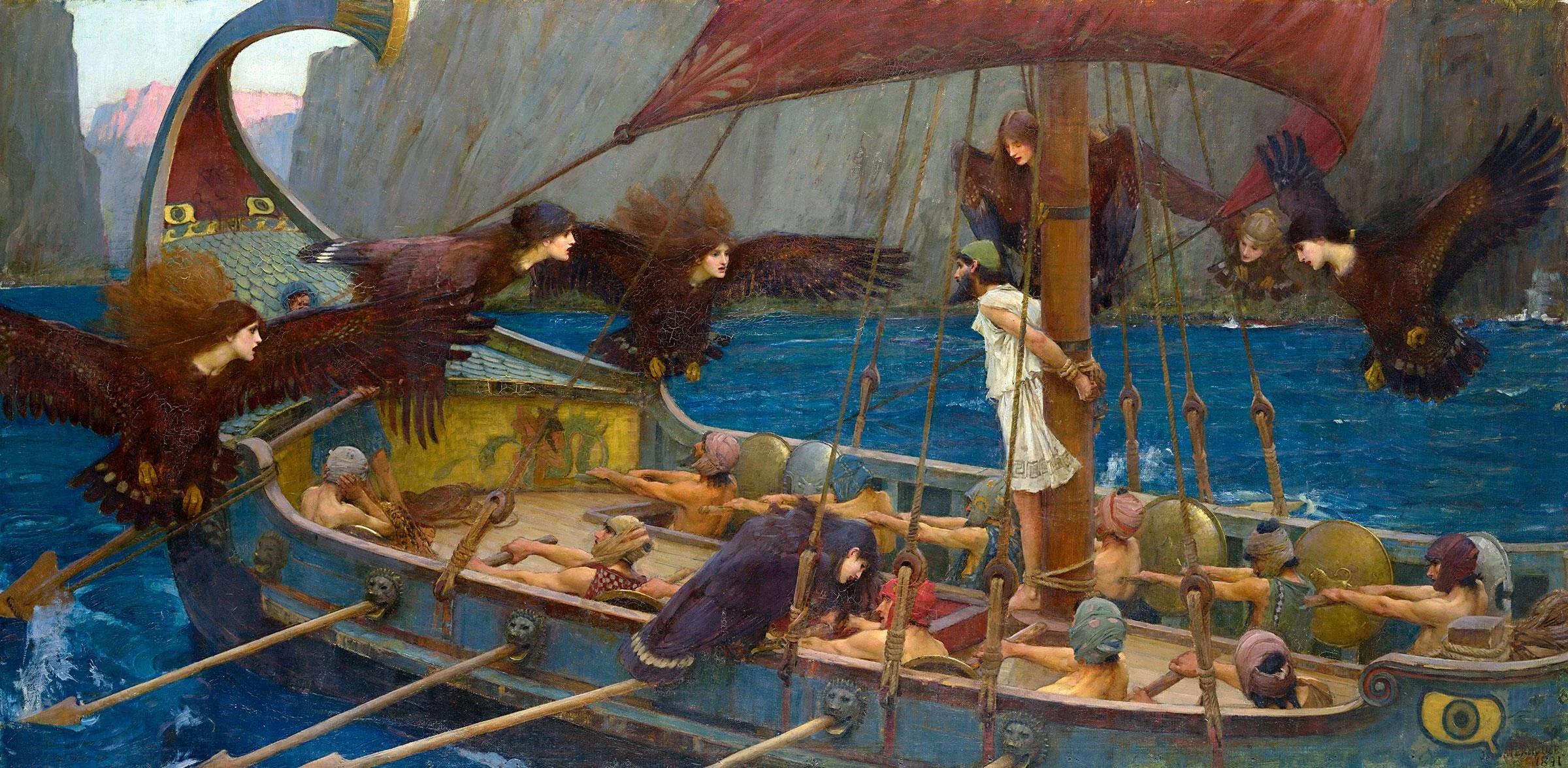
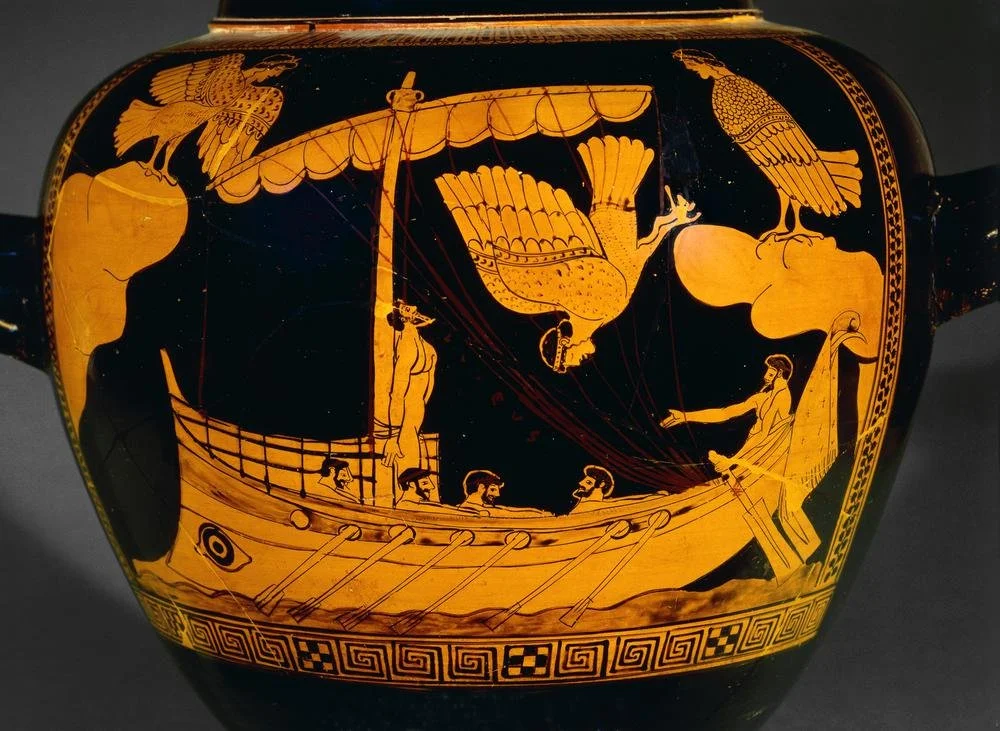
In Book 12 of The Odyssey, Circe warned Odysseus that the Sirens’ song is irresistible as well as deadly and, therefore, the safest thing to do was to plug every ear with beeswax and row past as fast as possible. However, Odysseus, a curious intellectual, desperately wanted to hear the song. Circe didn’t forbid him, but permitted it on one condition: his men must tie him to the mast and if he demanded to be released, they must only tighten the ropes.
It’s a good thing they did because when he heard the song, Odysseus was bewitched. He strained against the ropes until they cut into his flesh, certain that the Sirens were beautiful. Meanwhile, his crew saw them as the monsters they were. He heard what he wanted to hear and he survived because he accepted limits on himself before the song began.
That scene captures something every science teacher wrestles with. Science runs on curiosity, but curiosity – like Odysseus – needs to be tied to the mast..
Curiosity is a Good Gift
Let’s begin with what Odysseus got right. His desire to hear wasn’t the problem because curiosity is part of how God made us. Proverbs 25:2 says, “It is the glory of God to conceal things, but the glory of kings is to search things out” (ESV). Searching out what God has hidden in creation is not rebellion, but an invitation.
Many of our students arrive in high school having had the curiosity drained out of them. They have learned that school is about producing correct answers and that questions could be considered a sign you weren’t paying attention. Part of our job is to restore their appetite.
Here are a few ways to restore that curiosity:
Start units with a phenomenon instead of a definition. Let students see something puzzling before telling them what it’s called.
Keep a running “question wall” or question journal and come back to students’ questions later in the unit.
Occasionally answer a question with, “I don’t know. How could we find out?”
A classroom without curiosity lacks a song worth hearing, but a classroom with curiosity and no limits is dangerous.
The Shepherd’s Limits

Next to the Sirens, the Good Shepherd of John 10 offers a striking contrast. One of the things the sheep dislike about the Good Shepherd is that he places limits on them and he does so because he wants them to flourish. The sheep, however, want life without limits, so they chase other shepherds and they inevitably learn those shepherds are inferior.
The siren voice of our world promises life without limits and shouts that you belong to yourself so no one can set boundaries on who you are or what you can do. In science, that voice says that if something can be known or done, it should be and the only limit on inquiry is what’s technically possible.
Part of our work is helping students see the cost hidden in that promise and understand that limits on curiosity are not the enemy of discovery, but the condition for doing it well and doing it safely. Circe’s rope didn’t keep Odysseus from hearing the song. However, it kept him alive long enough to hear it.
Four Ropes on the Mast
Here are four kinds of limits I think are worth teaching explicitly and each can be developed through routine science instruction.
Physical limits: safety as a rope and not a rulebook. Students often experience laboratory safety rules as arbitrary restrictions on their fun. Odysseus offers a better frame. Goggles, fume hoods, and procedures are commitments we make before the reaction starts because we know we will be tempted in the moment to lean in closer than we should. A student who understands why the rope is there is far more likely to keep it tied.
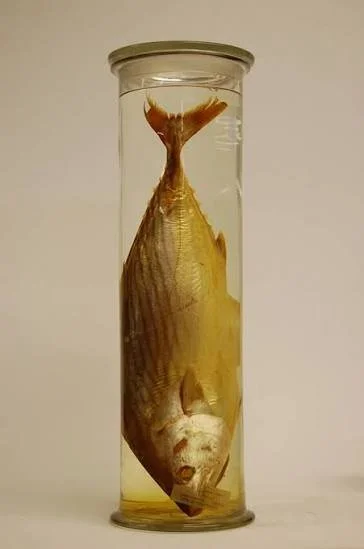
Moral limits: not everything that can be studied should be. Curiosity does not justify harm. In his 1874 essay “Take This Fish and Look at It,” Samuel Scudder wrote that 19th century naturalist Louis Agassiz told one student that “no man is fit to be a naturalist who does not know how to take care of specimens.” In other words, care for what we study is part of studying it rightly.
Older students can go much further. After World War II, German doctors were tried at Nuremberg for experiments performed on concentration camp prisoners without their consent. The judges' verdict produced the Nuremberg Code, whose first principle is that "the voluntary consent of the human subject is absolutely essential." Closer to home, the U.S. Public Health Service's syphilis study at Tuskegee, which ran from 1932 to 1972, shows that the lesson was not learned once and for all. Cases like these show what happens when curiosity is detached from love of neighbor and they help students see that ethics review and informed consent are not obstacles to science, but ropes on the mast.
Methodological limits: knowing what our tools can and can’t hear. Every method has limits. A thermometer can’t measure love and a microscope can’t detect purpose. When students forget this, they drift toward the assumption that whatever science cannot measure isn’t real. That assumption is not a scientific result, but a philosophical claim. A simple habit is to close every laboratory experience by asking, “What can’t this experiment tell us?” This question teaches students to respect both the power and the boundaries of the tools they are learning to use.
Self-imposed limits: protecting ourselves from our own wishes. Odysseus knew he couldn’t trust himself once the song began and I believe good scientists know the same thing about themselves. In his 1974 Caltech commencement address “Cargo Cult Science,” Richard Feynman said the first principle is that you must not fool yourself and you are the easiest person to fool. Control groups, blind procedures, written predictions, and raw data recorded in ink before analysis begins are all ways of tying ourselves to the mast before our biases start singing. It’s also worth noting that, in the story, the people who saw clearly were the ones who couldn’t hear the song. Clearly, Homer understood the logic of a single-blind study.
Curiosity and Attention

There is one more siren worth naming and it is the one nearly every student carries in his or her pocket. Because the siren voice can’t give us the affirmation we need, it offers likes, followers, and retweets instead. A great deal of what passes for curiosity in our students’ lives is really distraction; an endless, shallow stream of novelty engineered to keep them looking.
Real curiosity is different. It stays with one thing long enough to see it. Scudder’s essay describes Agassiz leaving him alone with a single preserved fish for hours, then days, until he finally began to notice what had been in front of him the whole time. That kind of sustained attention is itself a limit, a decision to stop scanning and start looking and it may be one of the most countercultural things a science classroom can offer.
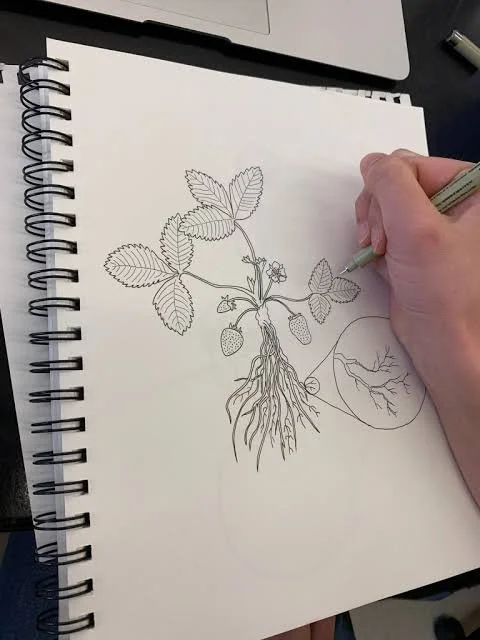
Try giving students one specimen, one image or one phenomenon and a long, quiet block of time with it. Their first reaction will probably be boredom. Push through it. What comes on the other side is the real thing.
Listening and then Responding
In biblical Hebrew, the word shema is used interchangeably for hear, listen, and obey. This suggests that hearing, listening and responding appropriately are connected, so listening isn’t just a passive mental process; by this definition, really listening to a voice requires a proper response.
Curiosity functions in a similar way. Its proper end is not simply to know more, but to respond rightly to what we come to know: with wonder, with gratitude to the Creator, with care for the creation and for our neighbors. Curiosity that serves only itself eventually becomes another way of belonging to ourselves.
Odysseus heard the song and lived because he accepted limits and our students can have the same experience. We don’t want to plug their ears. Instead, we seek to teach them to listen, eagerly and fearlessly, while tied to something strong enough to hold them.